
12 Bedroom Retreat Design Ideas That Turn Your Space Into a Personal Sanctuary
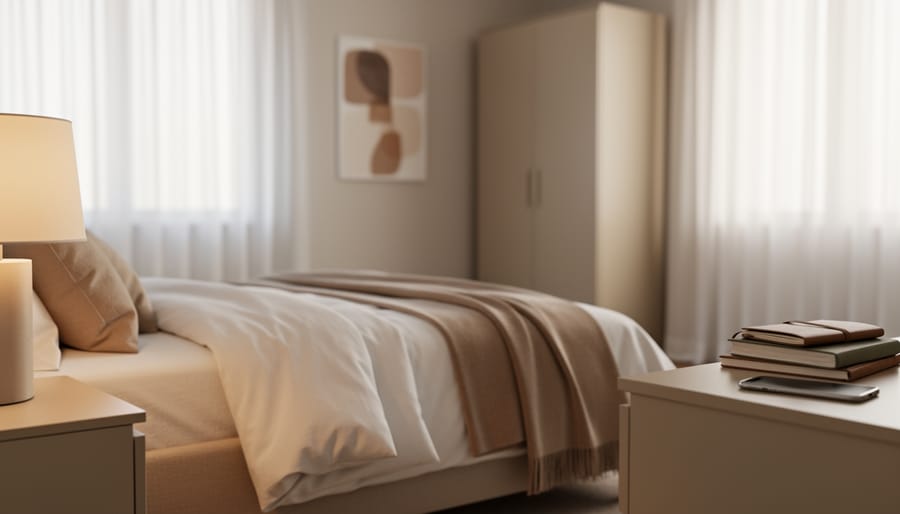
Your bedroom can become a true retreat with just a few intentional design choices that prioritize comfort, calm, and personal style without requiring a major renovation or huge budget. Most of these transformations rely on simple adjustments to lighting, texture, scent, and layout, changes you can make over a weekend or even in a single afternoon. The goal is to shift your bedroom from a basic place to sleep into a restorative space that helps you disconnect from daily stress.
You don’t need to start from scratch or buy all new furniture. The most effective bedroom retreats layer small improvements that address your senses and daily habits. Soft lighting replaces harsh overheads. Blackout solutions improve sleep quality. Decluttering creates visual peace. Personal touches make the space feel uniquely yours rather than a showroom copy.
This guide walks through 12 practical ideas that work whether you’re renting or own your home, and whether your budget is tight or flexible. Each suggestion focuses on real results, things like better sleep, a clearer mind when you walk in the door, or simply a room that feels good to be in. Pick the ideas that speak to your needs and start building your retreat one layer at a time.
How We Chose These Retreat Design Ideas
We selected these 12 bedroom retreat ideas using a clear set of standards that prioritize real-world application over magazine-perfect fantasy spaces. Every suggestion needed to pass four essential tests before making the list:
Creates a tangible sense of calm and promotes actual relaxation, not just visual appeal
Fits within a realistic budget, with most ideas under $200 and many under $50
Offers DIY-friendly implementation that doesn’t require professional contractors
Adapts to various bedroom sizes, rental restrictions, and existing decor styles
Delivers noticeable impact without requiring a complete room overhaul
The goal was practical transformation, not perfection. We focused on ideas you can implement this weekend rather than projects requiring months of planning. Some readers have explored sensory elements from an Edmonton adult store to enhance personal comfort and relaxation in their retreat spaces. Whether you’re working with a spacious master suite or a compact studio bedroom, these strategies scale to your space and situation. The common thread is intentionality: each idea serves your wellbeing while respecting your time and budget constraints.
1. Layer Your Lighting for Mood and Function
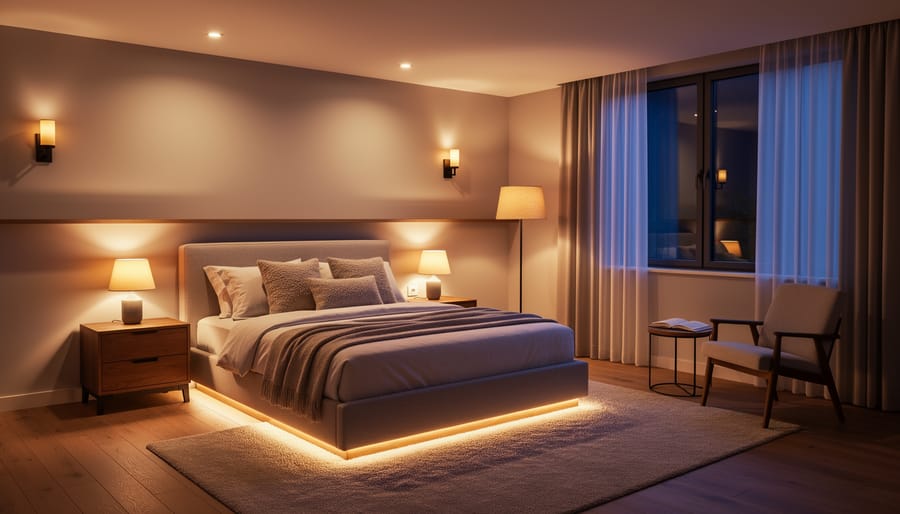
Good lighting is the fastest way to shift your bedroom from functional to calming. Instead of relying on a single harsh overhead fixture, layer three types of light: ambient (your main source), task (for reading or getting ready), and accent (for mood). This multi-level approach mimics the soothing effects of light found in spas and high-end hotels.
Start with a dimmer switch on your existing overhead light. It costs around $15-$25 and takes twenty minutes to install, letting you dial down brightness in the evening. Add bedside lamps with warm-toned LED bulbs (2700K-3000K color temperature) for reading without glaring light. Table lamps on nightstands or a dresser create pools of soft illumination that feel instantly cozier.
For ambient glow, string lights or a small table lamp across the room work beautifully. Drape fairy lights behind a headboard or along a bookshelf. Place lamps at different heights, one low on a nightstand, another taller on a dresser, to avoid a flat, one-dimensional feel.
Skip cool blue-white bulbs, which signal alertness. Warm light encourages your body to wind down, just like keeping bedding fresh when you wash your pillows regularly supports better rest. Layered lighting gives you control, letting you adjust the atmosphere from bright and energizing in the morning to soft and restorative at night.
2. Invest in Luxury-Feel Bedding on a Budget
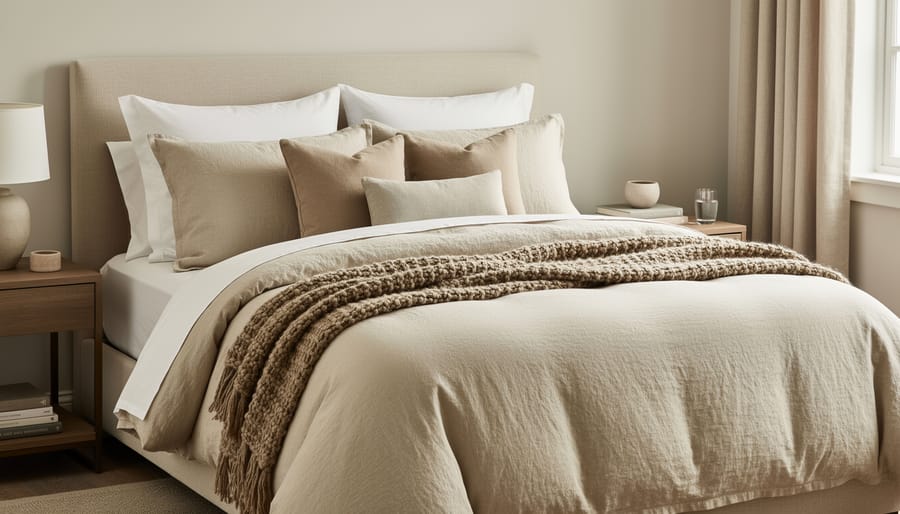
You don’t need to spend hundreds on Egyptian cotton to get that sink-into-it feeling. Start by ignoring thread count hype, anything between 300 and 500 works beautifully, and higher counts often just mean thinner, less durable threads. Instead, focus on fabric type. Cotton percale gives you that crisp, cool hotel feel, while cotton sateen offers a softer, warmer drape. Linen wrinkles like crazy but gets softer with every wash and regulates temperature beautifully. Microfiber costs less and resists wrinkles, though it can trap heat.
The real secret to luxury bedding is layering. Start with quality fitted and flat sheets, add a duvet with a removable cover you can actually wash, then pile on a lightweight blanket and a textured throw at the foot of the bed. This creates visual depth and lets you adjust warmth throughout the night.
Shop end-of-season sales at major retailers, check out discount stores like HomeGoods or Tuesday Morning, and don’t overlook online brands that skip the department store markup. Wash new sheets before use to maximize softness, and stick with neutral colors, they photograph well, hide stains better, and won’t clash when you want to refresh your look with new throw pillows.
3. Create a Dedicated Reading Nook
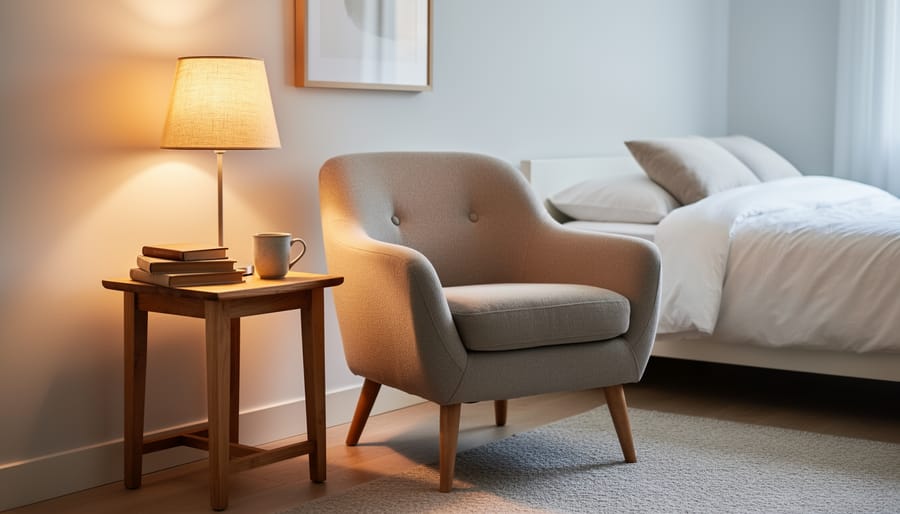
A reading nook transforms an underused corner into your personal escape pod. The key is creating a spot that’s distinct from your bed, so your brain associates it with relaxation rather than sleep.
Start with seating that actually invites you to sit. A secondhand armchair from Facebook Marketplace or a thrift store works perfectly, especially if you add a washable slipcover and a supportive throw pillow. In tight spaces, try a floor pouf with a back pillow, or claim your window sill by adding a custom-cut foam cushion wrapped in fabric.
Lighting makes or breaks a reading nook. Position a floor lamp or clip-on light so it illuminates your book without casting shadows. Warm-toned LED bulbs create a cozy glow without the heat of traditional bulbs.
Add a small side table for your current read, reading glasses, and a mug of tea. An inexpensive plant stand, a stack of vintage suitcases, or a simple floating shelf all work beautifully. Layer in a soft throw blanket and you have created a dedicated wind-down zone that pulls you away from screens and into genuine relaxation.
4. Add Natural Elements for Instant Calm
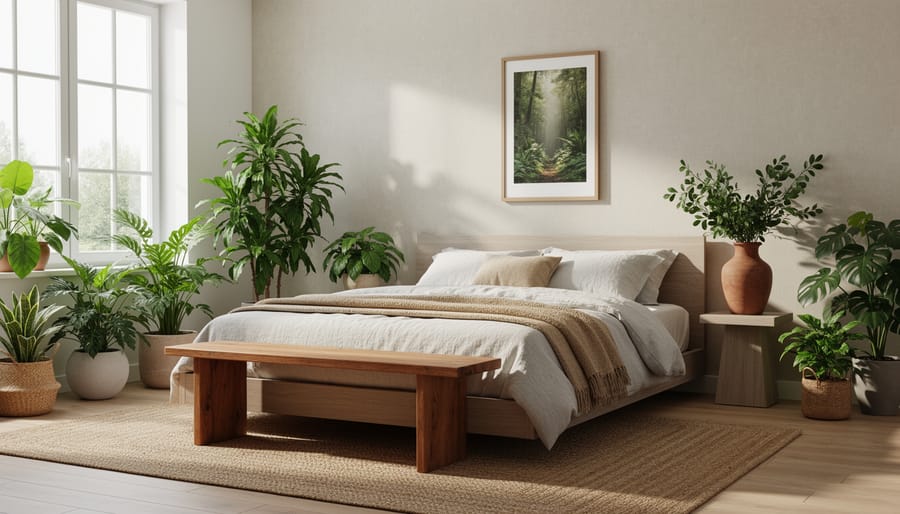
Bringing the outdoors in isn’t just trendy, it’s one of the fastest ways to make your bedroom feel like a true retreat. The concept behind this is biophilic design well-being which is just a fancy term for humans’ natural connection to nature. When you add plants, wood, stone, or organic textures to your space, your brain recognizes these elements as calming and restorative.
Start simple with low-maintenance plants that actually thrive in bedrooms. Snake plants and pothos are nearly indestructible, tolerate low light, and help purify the air while you sleep. A fiddle-leaf fig or rubber plant makes a statement in a corner, while small succulents work perfectly on nightstands or shelves.
Natural wood accents add warmth without requiring a full renovation. Swap plastic hangers for wooden ones, add a wooden tray to your dresser, or lean a reclaimed wood mirror against the wall. For a budget-friendly DIY project, collect driftwood pieces and mount them as wall art, or use them as a unique jewelry display.
Stone elements like a small rock garden, pebble-filled tray for your rings, or marble coasters bring texture and grounding energy. Woven baskets double as both storage organization and natural texture, use them for extra blankets or to corral items that might otherwise clutter your space. If you’re applying these natural principles throughout your room, check out our closet space tips for keeping organic storage solutions organized. The key is choosing a few natural elements that speak to you rather than overwhelming the space.
5. Establish a Soothing Color Palette
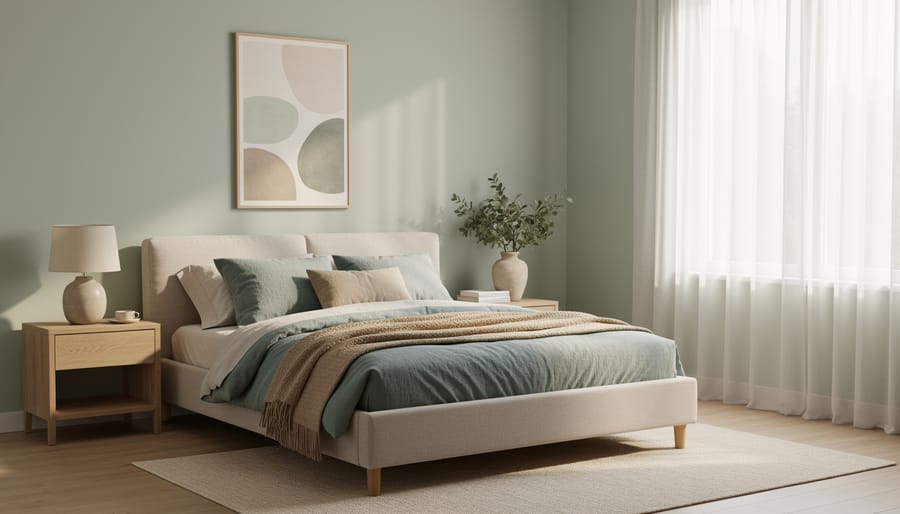
Color has a powerful effect on how we feel in a space, and your bedroom retreat deserves hues that encourage relaxation rather than stimulation. The most calming palettes typically center on soft neutrals like warm whites, beiges, and taupes, which create a clean backdrop without feeling stark or clinical.
If you want to introduce color, think about the shades you’d find in nature. Muted blues remind our brains of sky and water, naturally lowering stress levels. Sage greens and dusty olive tones bring the outdoors in without overwhelming the senses. Warm earth tones, terracotta, clay, soft brown, ground a space and feel inherently cozy.
You don’t need to repaint every wall to establish your palette. Start small by switching out throw pillows, adding a new duvet cover, or hanging curtains in your chosen shade. A single accent wall behind your bed can transform the room’s mood without the commitment of painting all four walls.
Avoid bright, saturated colors in large doses. Fire-engine red or electric yellow might energize an office, but they’ll work against the calm you’re trying to create. Stick with colors that feel whisper-soft rather than shouting for attention.
6. Declutter and Create Hidden Storage
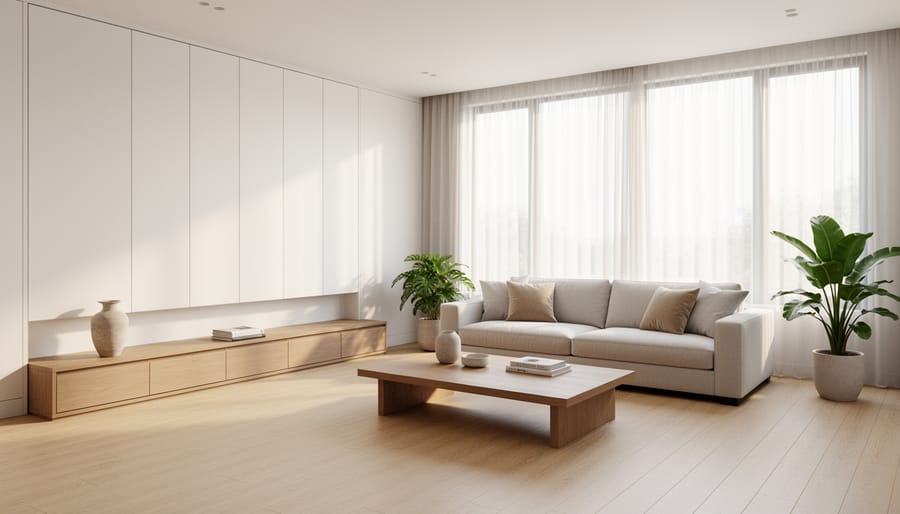
Visual clutter acts like noise for your eyes. When surfaces are crowded with random items, your brain can’t fully relax, even if everything else in the room feels peaceful. Creating a bedroom retreat means giving yourself visual breathing room, and that starts with smart storage that keeps belongings accessible but out of sight.
Under-bed storage bins are a game-changer for small bedrooms. Choose low-profile containers on wheels for easy access, perfect for storing extra linens, out-of-season clothes, or shoes. If your bed sits low, bed risers add 3-5 inches of clearance without changing the look.
Floating shelves work harder than nightstands when positioned above them or flanking windows. They hold books, plants, and a small lamp without eating floor space. Keep them styled minimally, three to five items maximum per shelf maintains that uncluttered feeling.
Decorative baskets are the budget-friendly secret weapon. Tuck them under consoles, stack them in corners, or line them on closet shelves. Woven seagrass or fabric bins look intentional while hiding everything from throw blankets to charging cables.
Inside your closet, simple upgrades create massive impact. Add a second hanging rod to double capacity, use slim velvet hangers to reclaim space, and install shelf dividers to keep folded stacks neat. The clearer your surfaces stay, the deeper your bedroom can breathe.
7. Incorporate Soft Textures Throughout
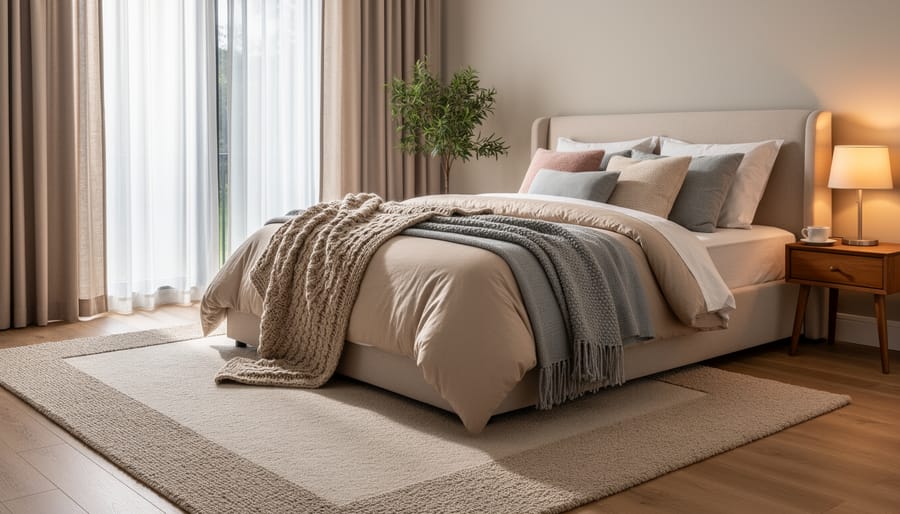
Nothing transforms a bedroom into a cozy retreat faster than layering soft textures throughout the space. Think of it as creating a tactile experience, when everything you touch feels inviting, your entire body relaxes.
Start with your bed as the anchor point. Layer a textured throw blanket over your duvet, add a couple of velvet or linen cushions, and suddenly you’ve got depth and visual interest. The key is mixing textures rather than matching everything perfectly. Pair a chunky knit throw with smooth cotton sheets, or drape faux fur over a linen duvet cover.
Don’t stop at the bed. A plush area rug underfoot makes getting out of bed less jarring, especially on cold mornings. Floor-length curtains in soft linen or velvet add warmth to windows while absorbing sound, creating a quieter space.
Budget-friendly texture sources? Hit up HomeGoods, TJ Maxx, or thrift stores for throw blankets and cushions. Online retailers like Amazon and Wayfair offer affordable faux fur and knit options. You can build a layered, luxurious look for under $100 by adding just three or four key pieces that invite you to sink in and stay awhile.
8. Install Blackout Solutions for Better Sleep
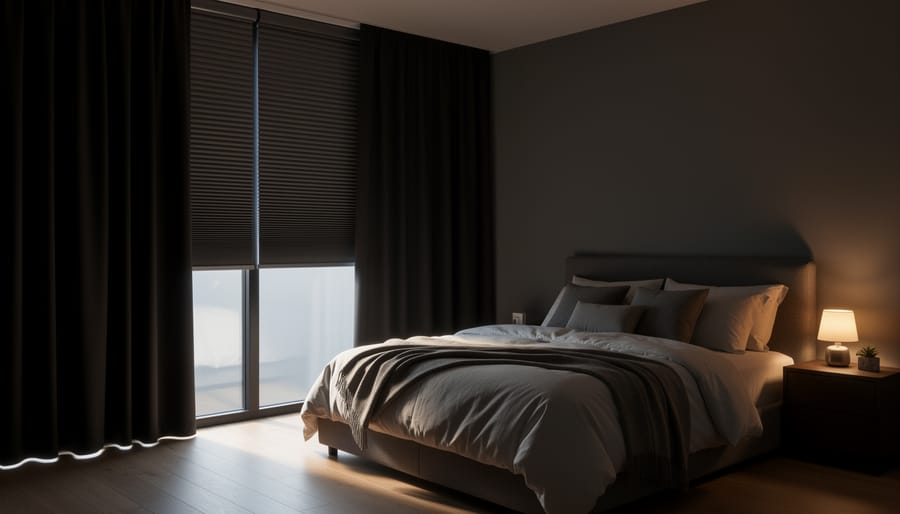
Quality sleep depends on darkness, your brain produces melatonin when light levels drop, signaling it’s time to rest. Even small amounts of light from streetlamps, car headlights, or early morning sun can disrupt this process and fragment your sleep cycles.
You don’t need expensive custom window treatments to achieve proper darkness. Blackout curtain liners slip behind your existing curtains and cost $15-30 per window. They attach with simple clips or sewn-in rings, giving you the blackout effect without replacing curtains you already love.
Roller shades offer another affordable route. Look for ones labeled “room darkening” or “blackout” at home improvement stores, typically $20-40 depending on window size. They mount inside or outside the window frame and work alone or layered with decorative curtains.
For renters or commitment-phobes, tension rods with blackout panels work perfectly. No drilling required, just adjust the rod to fit your window width and hang blackout fabric or curtains. You can remove everything when you move without leaving holes.
The gap around window edges often lets light seep through. Fix this with inexpensive solutions: stick-on Velcro strips to attach fabric directly to the wall, magnetic tape for metal frames, or even temporary blackout shades that suction directly to glass.
9. Design a Scent Strategy
Your bedroom’s scent has more power than you might realize, the right fragrance can lower stress, signal your brain it’s time to unwind, and make your space feel genuinely inviting. The good news? Creating a scent strategy doesn’t require expensive candles or complex systems.
Start with an essential oil diffuser, which you can find for under $25. Lavender is the classic choice for relaxation, but chamomile, eucalyptus, bergamot, and sandalwood all promote calm. Run your diffuser for 30 minutes before bed rather than all night, subtle is better than overwhelming.
For a no-electricity option, try linen spray on your pillows and sheets, or tuck sachets filled with dried lavender into your drawers alongside your dresser decor ideas. Soy candles work beautifully on nightstands, but blow them out before you fall asleep.
Place scent sources where air circulates, near a fan or window, so fragrance disperses naturally. Rotate scents seasonally to keep your nose from adapting. Most importantly, choose fragrances you genuinely enjoy. If lavender reminds you of your grandmother’s bathroom, it won’t feel relaxing no matter what the studies say.
10. Personalize With Meaningful Art and Decor
Your bedroom retreat should tell your story, not the story of a catalog showroom. Fill your walls with art and objects that genuinely make you smile when you see them, family photos from that beach trip, a vintage map from your favorite city, or paintings by a local artist whose work you love.
You don’t need expensive frames to display meaningful pieces. Dollar store frames spray-painted the same color create a unified look for mismatched art sizes. Mount a simple curtain rod as a budget-friendly way to hang tapestries, scarves, or textile art that adds both visual interest and softness.
When creating a gallery wall, lay everything out on the floor first to find an arrangement that feels balanced. Keep spacing consistent (about 2-3 inches between frames) and use painter’s tape on the wall to mark positions before hammering nails. Mix frame sizes and orientations, but stick to one or two frame colors for cohesion.
Display travel souvenirs thoughtfully rather than cramming them on shelves. A single pottery piece on your nightstand or a collection of shells in a glass jar creates calm focal points. The goal is curating items that spark positive memories without creating visual clutter.
11. Add a Touch of Luxury With Textiles
You don’t need designer prices to make your bedroom feel indulgent. The secret is choosing a few high-impact textiles that add visual weight and tactile richness.
Start with an area rug, something plush underfoot transforms the entire room. Look for deep pile or faux sheepskin styles at discount home stores, where you’ll find options under $100. Place it so your feet land on softness when you step out of bed.
Velvet curtains deliver instant elegance. The fabric catches light beautifully and adds warmth without custom drapery costs. Check clearance sections or online retailers for panels in jewel tones or soft neutrals that complement your palette.
A faux fur or chunky knit throw draped across your bed or reading chair creates that “sink into it” luxury vibe. Thrift stores often have quality throws for a fraction of retail prices, just wash them well.
Consider an upholstered headboard for a hotel-bed effect. You can DIY one with plywood, foam, batting, and fabric for around $75. Plenty of tutorials walk you through the process, though knowing your DIY vs pros comfort level helps you decide if it’s worth tackling yourself.
These textile upgrades work because they change how the room feels physically, not just how it looks.
12. Create a Tech-Free Zone
Your bedroom can’t truly be a retreat if you’re scrolling through work emails at midnight or waking to notification pings. Creating boundaries with devices isn’t about digital perfection, it’s about reclaiming your space for actual rest.
Start by moving your phone charger to another room, or at minimum, across the bedroom where you can’t reach it from bed. This simple shift stops the reflexive bedtime scroll and the grab-phone-first morning habit. Invest in a basic alarm clock instead. You can find reliable options for under $15, and waking to a gentle alarm beats the jolt of your phone’s default tone.
Build a tech-free wind-down ritual that signals your brain it’s time to decompress. Keep a book on your nightstand, try a gratitude journal, or do light stretching. The activity matters less than the consistency. If you need your phone nearby for emergencies, enable Do Not Disturb mode and place it face-down in a drawer.
For couples, make this a shared boundary. When both people commit to device-free evenings, your bedroom becomes a space for genuine connection rather than parallel scrolling. The retreat feeling comes from protecting this one room as sacred space where the outside world doesn’t intrude.
Bringing It All Together
Creating your bedroom retreat doesn’t have to happen overnight or drain your savings. Start by choosing two or three ideas from this list that genuinely excite you, maybe it’s finally adding those blackout curtains you’ve been thinking about, or creating that cozy reading corner you’ve always wanted. Your bedroom should evolve into a sanctuary through intentional, thoughtful choices rather than a rushed makeover.
How much does it cost to create a bedroom retreat?
You can start transforming your bedroom for under $100 by focusing on high-impact changes like lighting improvements, decluttering, and adding soft textures through affordable throws and pillows. A complete retreat makeover typically ranges from $300-$800 depending on which ideas you implement.
How long does it take to turn a bedroom into a retreat?
Most individual projects can be completed in an afternoon or weekend. A gradual approach over 2-3 months lets you spread out costs and really live with each change before adding the next.
Can I create a retreat feeling in a small bedroom?
Absolutely. Small bedrooms often feel more cocoon-like and restful. Focus on decluttering, smart storage, layered lighting, and calming colors to maximize the cozy factor without overwhelming the space.
Which retreat design idea should I start with?
Begin with what’s disrupting your sleep or relaxation most. If clutter stresses you out, tackle storage first. If you struggle with sleep quality, prioritize blackout solutions and lighting.
Remember, a true bedroom retreat isn’t about perfection or mimicking a magazine spread. It’s about crafting a space that genuinely feels restorative to you. The small changes you make today, swapping harsh overhead lights for softer lamps, clearing your nightstand, adding a plant, accumulate into something truly transformative. Your bedroom can become the peaceful sanctuary you deserve, one thoughtful choice at a time.